Categories
Faith Explorers Recent Topics

10 March 2014 DVD series “Exploring Open Christianity” Episode 4: ‘Exploring Jesus & Paul’ with John Dominic Crossan

Crossan emphasised that we need to understand the context (Crossan preferred the term matrix) in which Jesus found himself which would have greatly influenced his life and teaching.  The Romans were very intrusive into ordinary people’s lives from which arose a feeling that they were in an eschatological time frame – ie that things were so bad surely God would intervene to save them from this oppression.  The fact that God had not intervened was causing doubt that God really was ‘in overall control’.  When Herold The Great died the Palestinians revolted and the Romans sacked the town of Sepphoris just a few kms from Nazareth; 2 points – Jesus therefore would have known the viciousness of the Roman soldiers and he never made any recorded reference to it.  When Paul wrote he deliberately used the titles applied to Caesar/Emperor (eg The Lord, Savour) to Jesus as a challenge to the power of Rome (insurrection/treason).

Crossan drew our attention to the differences between Roman practice of ‘Peace through Victory’ to Jesus’s ‘Peace through Justice’.  Our present use of the word ‘justice’ implies punitive justice, retribution, punishment eg Department of Justice.  This is not the meaning of Jesus’s use of the word.

Paul’s vision of Jesus at Damascus framed Paul’s theology.  Note parallel to Luke’s view of people being blind but after baptism can see – just as Paul did as recorded by Luke in Acts.  Paul engaged with God Fearers/God Worshippers – gentiles that worshipped in the Synagogues (but who were not converts to Judaism), in his taking of the message of Jesus to Gentiles.  He didn’t stand on corners trying to engage, but went to where people already knew Judaism but could be open to new ideas.  This proved to be very effective and opened up conflict with the Jewish establishment. [Is there a modern day parallel for us in this?]

Crossan concluded by emphasising that we have to break the fallacy of War=> Victory=>Peace as this only leads to ‘lulls’ in conflicts.  We have to promote the alternative vision of Justice =>Peace to make real change (just like the abolition of slavery).  ‘I believe …’ is not sufficient, we must be committed to the programme by never accepting the illusion of achieving peace through victory.

Categories
Faith Explorers Recent Topics

3 March 2014 DVD series “Exploring Open Christianity” Episode 3: ‘Exploring the future of a faith community’ with Peter Kennedy

Father Peter Kennedy is a RC Priest who was removed from St Mary’s in South Brisbane by his archbishop – see here.  Hundreds of members followed him to form “St Mary’s in Exile” which after 3 years was thriving – see also here and still is today.

Peter was called originally as a prison chaplain and as administrator to St Mary’s which was very small at the time.  This work led Peter to develop an affinity for people who are ‘marginalised’ and an increasing sense of the injustices faced by those on the periphery of society.  This lead him to slowly but steady change the liturgies (and furniture) at St Mary’s to reflect this emphasis – on welcoming and encouraging participation and exploration by all.  He noted – as we have previously – that Jesus used open ‘table fellowship’. Increasing, the liturgy contained contemplation, mediation and then mystical elements.  For Peter, mysticism is the future for Christianity – away from doctrines and dogmas, atonement theology and a church hierarchy which claims to be the only channel to connect with God (compared with mystics who claim a direct connection).  Exclusive church hierarchy results in a structure that leaves church members to just “pray, pay and obey”.  Mysticism is a common thread through all religions.

Peter has great affinity with Harvey Cox’s book ‘The Future of Faith’ – (see a review here) – involving small groups meeting together leaving hierarchies behind.  His last point was a discussion on duality – v – oneness.  It took us a while to get a handle on the concept of oneness – basically we as individuals are not separate entities within the living world but integral parts of it.  There is no ‘me’, no small self, but one ‘large self’. Ego gets in the way.  See Eckhart Tolle and here.  We need to surrender to this truth if we are to achieve real inner peace.  The secular is becoming sacred.

Categories
Faith Explorers Recent Topics

24 February 2014 DVD series “Exploring Open Christianity” Episode 2: ‘Exploring the future of religion’ with Lloyd Geering

The series comprises 5 interviews with ‘Progressive’ Christians, each consisting of 3 approx 10min sessions.

Lloyd started by outlining his interpretation of the first and second Axial Periods (800 – 200 BC & 17th century respectively).  The second was necessitated by a need to transform the religious traditions.  The ‘liberal’ period of the 1880s stalled.  Not easy to separate religion & culture.  Fundamentalism does separate these by living in the past.  The modern secular world has evolved out of the Christian west and has achieved many positive steps for society – abolition of slavery, tackling racism, equal gender rights, democracy, social welfare, (could I add: greater acceptance of LGBT people?).  With weakening numbers of children in churches, where will values be taught? Touches the topical issue of religion (Christianity) in Schools – v – teaching of ‘values’.

Lloyd supports the need for Christianity/religions to change reflecting biological evolution & society changes – only ‘death’ is changeless!  Christians need to participate in a movement rather than join an organisation.  Lloyd has an affinity for Buddhism; their term ‘awaking’ is analogous to Christian resurrection.  Any exclusive claims of Christianity must be rejected. He acknowledged that ministers in training are not taught how to convey modern knowledge of the Bible from research undertaken by such as from the Weststar Institute.  Ministers don’t wish to ‘disturb the peace of the church’ by introducing new knowledge which will challenge old understadings.  Lloyd also made the important point that the sermon is to provide encouragement – not teaching.  The latter is better suited to a midweek group.  Generally the church has been very poor at education

Do we need to re-discover our faith as a motivation for serving/acting in the world; lots of people do ‘good things’ who are not Christians – is their motivation different or not?  For Lloyd, the environmental green movement is the spiritual priority for today.

Categories
Faith Explorers Recent Topics

17 February 2014 DVD series “Exploring Open Christianity” Episode 1: ‘Exploring doubt and faith’ with Val Webb.

The series comprises 5 interviews with ‘Progressive’ Christians, each consisting of 3 approx 10 min sessions.

Val outlines some of the steps of her personal faith journey, but started with doubts arising from a literal interpretation of the Biblical text.  She noted we only move forward by exploring and questioning and it is helpful to be able to do this in an environment that is accepting and non-judgemental.  She speculated that in general, clergy are reluctant to share progressive ideas as lay people are not capable of ‘doing’ theology.  In her view it is vital that we each do our own theologising.

The faith journey often starts with the heart (I love Jesus), then for Val moved to the head to de-construct and turnover, consider over time (compost) fresh ideas and concepts and test and challenge these.  Once comfortable with the new understandings, we can re-construct our faith journey which is reflected in how we live ie more heart. (Story of the road-rage driver!) Using our gifts is more important than what we believe.  God is within us and everywhere, so for Val to be fully human is to pray.  All images of God are metaphor and picked up from our environment.  As an example, feminist theology delivered a mortal blow to the patriarchal view of God in the 20th century.

Everyone (liberal and conservative) is very selective about what is regarded as truth in the Bible. Val urges us to develop our continuing stories of acts in our time and contexts.

Categories
Sermons

All Saints 2 – Clara Celestia Hale Babcock (1847-1924)

The second person I want to talk about in this series is a woman called Clara Celestia Hale Babcock.  She holds a significant place in the Christian Churches’ tradition.  She was born in 1850, a little over a hundred years after Susanna Wesley died.  She was an American, born in Ohio, the daughter of a Methodist preacher.  Her father died when she was too young to remember him.  From an early age she was interested in the Christian Temperance movement.  This was the movement whose response to alcohol abuse was to try to outlaw the manufacture and sale of alcohol.   She met and married Israel Babcock in 1865.  She and Israel had 6 children, though only 2 of them survived into adulthood.

The pair of them joined the Christian Churches movement in 1880 after hearing an evangelist at a revival meeting.  Clara was active in women’s civic organisations, particularly temperance ones.  She was gifted, intelligent communicator and was in demand as an evangelist and a temperance speaker.  In 1888 she came to lecture about temperance at the Christian Church in Erie, Illinois.  They liked her so much that they asked her to stay as their pastor.

Clara Celestia Hale BabcockSo Clara Babcock became the very first woman in a recognised denomination to be ordained to an extended ministry in a congregation in the United States.  She was a very successful evangelist during the period of what is called the Second Awakening.  It is said that she baptised 1502 people over the course of her ministry.  Her ordination and those of the women who followed opened a fierce debate within the Christian Churches movement.  It was one of the factors along with the place of musical instruments and other essentials of the faith, that eventually in 1906 caused the movement in the States to split into the more conservative Churches of Christ and the more open Christian Churches/ Disciples of Christ movement.  Today in the United States the Disciples of Christ has a woman leader who is in her 2nd term of office, and the Churches of Christ are still debating the validity of women preachers.

Paul’s statement in Galatians that there is neither male nor female in Christ was central to Clara Babcock’s understanding of the validity of her ministry.  When it was questioned she simply pointed to what she did.  Here is what she says about one of her years at Thomson Illinois.

‘The visible results of my work are 96 additions – 38 heads of families, 8 from the Methodist Episcopals, 6 from the Baptists, 9 reclaimed; preached 240 sermons, 16 funerals, 12 weddings, 470 visits made, 1500 miles travelled to and from my labour.  I am currently in perfect health and I haven’t missed an appointment in over four years’
Perhaps that last remark was directed at those who argued that a woman’s constitution was unsuited to pastoral ministry.  Like Susanna Wesley it seems she had a tremendous capacity for work.

Clara Babcock held a number of pastoral positions in Illinois and Iowa and South Dakota over her 35 years of ordained ministry.  She was involved in active ministry right up to the end of her life.  She died in 1924.

But I discovered something that shocked me about her when I was reading through old newspaper clippings.  One recorded that her funeral service was packed and that Women’s club, the Ladies Aid Society and the women’s Auxiliary of the KKK attended in a body.  Later on it said that the Erie KKK escorted the funeral procession to the cemetery.  Did KKK mean what I thought it did?  It appears so.  ‘Should I be talking about her at all?’ I wondered.  I started to read a bit around the women’s auxiliary of the KKK in Illinois at that time.

In 1919 Abolition came in and the temperance movement that Clara Babcock and many from the churches were part appeared to have won.  What happened of course was that Abolition was extremely unpopular and the bootleggers arrived and the mob started to make a lot of money out of illegal grog.  Those of you who have been watching the Boardwalk Empire series on TV will have some inkling of what went on.  There were law and order issues.  There were very few blacks in Illinois; the KKK at that stage was more anti catholic and anti-newcomers from Europe than anti Black.

The Klan styled itself as patriotic upright white Protestant American, upholders of morality and community standards.  Perhaps that’s not all that different from what Klansmen do today, but the real difference is that in the early 1920s they had wide general support in the community, especially the church community.  They seemed to be on the same page.  There were alliances that we would not be at all comfortable with today with the benefit of hindsight.  Clara was a woman of her time and it would appear that through her temperance associations she had these other less desire able connections.

On a more positive note one of her obituaries reads, ‘Her life, her work in Erie and elsewhere is the most fitting and lasting eulogy that could be written of this noble woman.  Beloved by the community she was always a welcome visitor to their homes or social gatherings.  She was always ready and willing to assist in any undertaking for the good of the community.’  Another of her legacies was that there were at least 15 other women who were ordained as preachers either directly or indirectly through her influence.

When one person is prepared to follow where their God given gifts lead them, they open up space for others to do likewise, and the church and the community are the richer for that.  Both Clara and Susanna Wesley illustrate that.

Who has made space for you to develop your God given gifts?

Whom have you made space for so that they can develop their God given gifts?

Let’s give thanks for those who have helped us and for those whom we have helped.

 Sources:

The Encyclopedia of the Stone-Cambell Movement:Christian Church (Disciples of Christ/Churches of Christ) ed.  Douglas Allen Foster, Eerdmans 2004
Erie Cemetery History Project- www.angelfire.com/folk/foec/babc001.html
www.discipleshistory.org/history/people/clara-hale-babcock

Categories
Sermons

All Saints – Susanna Wesley (1667 -1742)

On this All Saints’ service I’ve chosen to bypass the blokes and to begin a biographical series on some of the women who have been significant people in the strands of the Christian church that are part of our DNA here at Tawa Union (Methodist, Christian Churches, Presbyterian).  These women are saints in the Protestant sense of the word, that is in the same way that all of us can be called saints.  In their various ways these women allowed their faith in God to affect the choices they made and the ways that they lived.

The first has been called the mother of Methodism.  The title is hers not just figuratively, but literally.  I am talking about Susanna Wesley; she was John and Charles Wesley’s mum.  The origins of many of the spiritual practices that came to be associated with Early Methodism can be traced back to Susanna.  She was a very organised, devout and disciplined woman.  Organised, serious devotion was what marked those early Methodist communities.

Susanna’ s father, Dr Samuel Annesley, married twice.  Susanna was the youngest of his 25 children (yes, I did say that).  I have no idea how many of them survived into adulthood.  Susanna, herself, would give birth to 19 children.  Only 9 of them survived infancy.

Susanna’s father was a dissenter – a minister who refused to sign the Act of Uniformity in 1662.  This act brought in changes to the Prayer Book.  He left his Anglican parish in Cripplegate, London and set up his own congregation.  He was an independent thinker, a highly regarded preacher, and at one point chaplain to the parliament.

Susanna displayed a similar independence of mind, when she chose at the age of 13 to rejoin the Church of England.  She married Samuel Wesley in 1688 – she was 19 and Samuel 26.  Samuel was a Church of England minister.  The couple spent the first years of their married life in London and South Ormsby.  They then moved to Epworth a village near Lincoln.  Epworth was to be their base for the next 40 years.
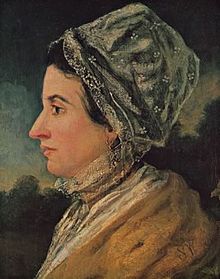
Susanna_WesleySusanna’s life was a hard one.  Samuel’s work and personal circumstances saw him away from the parish for extended periods of time.  He was not good at managing money and ended up in debtor’s prison on a couple of occasions.  This put a great deal of pressure on the family and their health.  Had young Samuel, the oldest of the Wesley children, not been away from home, working and able to send money home the family might have been even worse off.

Fire twice destroyed the Rectory at Epworth during their residence.  In the second fire 5 year old John Wesley had to be rescued through a second storey window.  His younger brother Charles was just a baby and Susanna was pregnant with her youngest child.  It was a devastating time for the family, in particular Susanna.  She was forced to place her children in different homes for the best part of 2 years while the rectory was rebuilt.  She was not all that impressed with their manners and behaviour when her family was once again reunited.  She determinedly set about getting them into line again.

Susanna developed the practice of spending an hour a week one on one time with each of her children.  In that time she would ‘enquire after the state of their soul’ and check in on what they were thinking, their fears, expectations, goals.  In doing this she was instilling in her children a regular practice of self-examination.

Susanna homeschooled all her children, girls as well as boys.  On the first day of her tuition she expected them to learn the entire alphabet.  They all learned Latin and Greek and Classical Studies.  She was obviously a good teacher.  The three boys went on to take Master’s degrees from Oxford.

At one point when her husband’s work took him away for some months, the supply minister whom he’d arranged to take his place was so awful, that Susanna decided she needed to supplement her family’s religious education for the duration of the supply.  On the Sunday afternoon she would gather the children.  They would sing a Psalm.  Then Susanna would take one of her husband’s or father’s old sermons and read it out loud and then they would finish with another Psalm.  When others in the parish got to hear of this they asked whether they could join in.  It got to a point where there were over 200 at Susanna’s afternoon service and almost no one at the supply minister’s Sunday morning service.

To nurture her own spiritual life Susanna had a practice of daily devotions.  She also wrote scripture meditations, and commentaries for her own use on things like the Lord’s Prayer and the 10 Commandments.  Many of these went up in flames in the rectory fire.  Some remain, however, as well as some of her letters to her children, sharing her wisdom and advice on life and the Christian faith.  Susanna’s husband, Samuel, comes across in what I have read as somewhat inept.  His life’s work was an exegetical commentary on the Book of Job.  It was a labour that took its toll on the family finances and has long been forgotten.  Susanna’s more practical offerings had a far greater and more positive affect on the family and beyond.  They are the writings that are remembered.

Susanna was a person who grasped the usefulness of good structures and habits.  One can imagine these things would have been lifesavers in the chaos she endured.  She integrated her wisdom about structures with her approach to faith.  Her spiritual life was disciplined, practical and devout.

She also understood the importance of education for girls as well as boys.  She could make up her own mind about things and create solutions for problems she faced.  Women of her day weren’t given credit for being able to do those things.  In her, Charles and John had a role model of a highly capable, intelligent woman.  Her influence was surely one of the reasons why John was open to women in the Methodist movement exercising their gifts in leadership, not just among other women but in mixed gatherings as well.  In time he would even let authorised women preach.

Methodism is very much in her debt.

 Sources
En.wikipedia.org/wiki/Susanna_Wesley
Susanpellowe.com/susanna-wesley.htm

Categories
Faith Explorers Recent Topics

2 December 2013 video “The Protestant Reformation” part 4 ‘No Rest for the Wicked’ written and presented by Tristan Hunt

The concluding episode covers the development of what is known as ‘the Protestant work ethic’ and its sidekick ‘profit’. Before the Reformation the ideal was to withdraw from the world eg in Monasteries as poverty and godliness went hand-in-hand, work was demeaning, any profits were distributed to the church for the betterment of all.

Calvin’s interpretation was ‘salvation through faith’, but how might one know if one were saved ie one of the Chosen? The answer became that God’s favour was evidenced if the person prospered.  So now work had an intrinsic value and wealth was the best evidence of God’s favour.  So business success with Christian morality/responsibility/spirituality became intertwined.

Faber introduced the importance of the careful use of time as to be saved one had to account that one’s time had been used properly; therefore idleness was not fulfilling this requirement.  Hence ‘busy-ness => business’.  In 17th and 18th centuries UK became powerhouse for commerce and industry eg Lloyds, Barclays, Wedgewood, Cadbury.  Puritan Winthrop established very successful Boston which demonstrated God’s favour.  Benjamin Franklin spread the Puritan values with his pithy proverbs eg ‘God helps those that help themselves’.  For Wedgewood the efficient use of time established the concept of the modern factory eg fixed hours, training and use of specialists, worker housing, Unions.

The blight of slavery which benefited the Anglican Church in St Thomas was defended as saving the slaves from idleness!  By over working slaves (to death) the church became very wealthy – it became consumed by an overwhelming profit motive.  The Quakers and Methodists as non-conformists succeed in banning it in 1833 after a 40 year (first) human rights campaign.  This highlighted the ‘slaves’ in the UK – child labour which Saddler’s campaign eventually ended.  Children and women were especially degraded by the profit motive which had regained some balance by turn of 19/20th century.

In US liberty and prosperity were the twin objectives as typified by Ford production line.  The godly commonwealth was replaced by individual prosperity and the pursuit of profit and pleasure.  Capitalism devoid of Christian ethics has lead to environmental destruction and the rise of the countering (17th century non-Conformist) challenge of on-site, non-violent protest eg Greenpeace.

So now we have on one hand work, money, profit and on the other protest, highlighting the high cost of capitalism; individualism – v – ethics & conscience.

What started as God everywhere => search for business success => secular world => now God seems nowhere!  The recent observations by Pope Francis on western capitalism seem to pointing to this loss of an ethical keel to keep us upright in the rising storm of ever increasing consumerism and consumption.

Categories
Faith Explorers Recent Topics

25 November 2013 video “The Protestant Reformation” part 3 ‘A Reformation of the Mind’ written and presented by Tristan Hunt

The common thread with the previous episodes is the un-anticipated consequences of the freedoms enabled by the concept of the ‘priesthood of all believers’ – the Church no longer had absolute say over people’s lives.  Explored in 3 aspects.

Art: Prior to Reformation there was a large quantity of religious ‘art’ even in parish churches.  The Reformation movement in England lead by Cranmer declared all art forms – stained glass, tapestry, paintings, icons as idolatry and must be destroyed along with the Dissolution of the Monasteries.  The Bible was the only route to salvation – the triumph of word over image.  As art was no long welcomed in churches, this encouraged the development in new directions especially paintings – firstly portraits and then everyday common life.  The establishment of art museums is another consequence.

Literature: As the Bible replaced images and icons, so reading became centrally important to determine whether one was on the path to salvation.  Hence the rise of the diary to confirm one’s life was on the right track and hence the autobiography – as typified by John Bunyan’s ‘Grace Abounding to the Chief of Sinners’ and then an allegory of true life ‘Pilgrims Progress’ which become the forerunner of the novel, as in Daniel Defoe’s Robinson Crusoe and the eventually into the religious satire of Dickens.

Science: The Protestant ethos of self questioning, challenging of authority had a huge impact on the progress of science and technology.  Protestantism encouraged a direct approach to God on matters of salvation and so supported a direct investigation of the natural world ie not via the Bible or though religion.  In this sense they were not in conflict and the first industrialists (James Watt and Matthew Bolton) and the first members of The Royal Society (Isaac Newton) were pious, God-fearing people. Non-conformists (rejected the authority of C of E), explored and then commercially exploited the natural laws especially physics, formed the Lunar Society with Watt and Bolton as members.  Darwin’s father was also a member.  Newton’s mathematical description of the movement of the planets, sun, moon, tides etc and Darwin’s theory of evolution, challenged the authority of the Bible and hence God’s role in the physical world, leading to increased secularism.  In the 20th century and especially in USA, this lead to a backlash by Christian Conservatives, such that it was claimed that nearly 50% of Americans believe the earth is less than 10,000 years old!  On the other hand with rapidly increasing knowledge of the genome, should there be limits on what scientists are allowed to do?  Is it anything goes?  As the former Archbishop of Canterbury Rowan Williams noted “The Reformation is cultural not just a religious one.” Surely an understatement.

Categories
Faith Explorers Recent Topics

18 November 2013 video “The Protestant Reformation” part 2 ‘The Godly Family’ written and presented by Tristan Hunt

The common thread with part viewed last week is the un-anticipated consequences of the freedoms enabled by the concept of the ‘priesthood of all believers’ – the Church no longer had absolute say over people’s lives.  This episode focused on the personal relationships, that marriage was a goodly (Godly) state; that family life could demonstrate a loving, caring supportive, even worshipful companionship.  An example of living a life of Christian values.  This lead to a gradual recognition of the equality of the sexes.  Cranmer’s Book of Common Prayer provided the first formal structure for a marriage ceremony (very informal beforehand with little/no church involvement); recognised that marriage was for fun as well as support for each other and children that was regarded very positively by God.  This was in contrast to the RC elevation of celibacy.

In the home the wife was the heart of domestic spirituality – especially with longer and defined working hours for the (male) earner.  This was elevated a step further by Queen Victoria.  In the late 19th/early 20th centuries wealthy women became urban missionaries as they sought to bring order/assistance to less fortunate families; this brought a recognition of the very difficult social circumstances which lead women to recognise that they needed political power to effect significant social change.  20th century has seen women gaining more freedoms (the pill) and equality in business and politics.  There has been an increasing recognition of need for equality for different races (US Civil Rights Movement headed by Martin Luther King Junior, end of Sth African apartheid) and sexual orientation (gay marriage); the rise from mid 20th century of conservative Christian right in the US to counter these trends – culminating in election of GW Bush.

Categories
Faith Explorers Recent Topics

11 November 2013 video “The Protestant Reformation” part 1 ‘The Politics of Belief’ written and presented by Tristan Hunt

This traces the impact on the church with the formation of Protestantism and (via Henry VIII) on politics and the formation of the UK Labour Party and more latterly, the divisive politics of the USA. The most critical concept identified by Luther was the ‘priesthood of all believers’, ie that we are free to determine our own beliefs by studying the bible and other writings.  This had a consequence not only within the church hierarchy itself but also with secular society in that it encouraged  challenge to all hierarchies and authorities.  This resulted in the formation of Protestant church from the Roman Catholic as lead by the authority figure of the Pope, the beheading of Charles the First (for religious not political reasons) and may yet undermine US right wing political conservatives.

Luther and his supporters exploited the use for the new technology of the printing press to communicate their view about how one might save one’s soul (through faith alone).

Luther’s 95 precepts were not in themselves, particularly radical but came at a critical time so they acted as a trigger.  Dissatisfaction with the church was high, sale of indulgencies made many uneasy with the promise of ‘salvation’ unaffordable, the Bible was not available to the common person and was only read ‘unintelligibly to most’ in Latin, Greek or Hebrew which preserved the power structure of the church and priests to interpret. Luther’s revelation of the ‘priesthood of all believers’ and his consequence translation of the Bible into everyday German not only broke the priests grip on power but unleashed a pent-up grab for power by Princelings anxious to replace the church’s influence.  This was not what Luther expected or wanted; he was looking to ‘reform’ the (Catholic) church not replace it nor to turn society upside down in the process.  [There is a modern parallel in the publication of A.T. Robinson’s Honest To God in 1963, and Prof L Geering’s  subsequent articles in NZ, which also acted as a trigger with wide and unexpected consequences.]  Change and the need for reformation is on-going.