
What is the purpose of the economy – to live and be sustainable. We are heading towards self-destruction by making more money for those who already have too much. This is recognised by most people but why aren’t we doing anything about it? Senior managers are ‘servants of the system’ ie not in control of it, so change can’t come from within. Economics is a system and should be for the benefit of all. The development of the economic story – how it all works – is not necessarily true or the only way/system. Life is about being, not accummulating!! Time is Life – v – Time is Money!!
Mission stations were only established at the invitation of Maori in 1820s though with little ‘success’. In late 1830s, Maori did more to spread the Gospel than Missionaries with its message of love. Rejection of ‘utu’. Mainly used gospel of Luke. By 1850s more Maori adherents than European. The Mana of the Treaty and the Missionaries was strongly linked – we are one people.
The ‘bad’ behaviour of Europeans especially (non) Sunday observance and the land wars destroyed Maori trust in ‘Missionary Christianity’ and led to the emergence of Maori Christian sects.
Books should disturb us ‘like an axe on a frozen lake’. Treat the Bible like a sausage to be taken as a whole – not attempt to unscramble into its component parts. John’s gospel is very different in content and approach to the 3 synopics. The writer was a mystic, he gives a profound portrait of Jesus but does not contain a word he spoke! Very Jewish book eg extensive use of ‘I Am’ as used in OT for God. The gospel was very influential at the Council of Nicea – the mystics won the day. Hence Trinity, Creed etc. Some differences with synoptics identified.
The book aims to debunk the proposition that ‘religions have been the cause of all major wars in history’ and that religion and politics are a dangerous combination. The basis of the rebuttal is that up until the 18th century, religion and politics could not be separated – religion permeated everything. Politics/the state was established and maintained through violence. The new religion is the state/nationalism – people willing to die to protect it. Society stratification which kept 90% of people in low standard of living allowed the development of art and philospohy. Support for Charter for Compassion.
Categories
A Matter of Love:- Romans 13:8 -14:3
I worked with university students for a while. I can remember reading over an essay for an overseas student once to check his grammar. It was an economics essay from memory. It was full of unnecessarily big words! Even more than a subject like economics would normally use. It was as though he had gone to the thesaurus and picked the longest equivalent word in the list and put that in his essay. I challenged him on it, and said ‘Why have you said it that way when you could have just said this? Because this is all you mean isn’t it?’
It was a conversation between an English Graduate and a commerce student with English as a second language. But he didn’t understand that if something can be put simply, that is probably the best way to put it. He made the assumption that many people who are not trained to write make. He thought that the longer the word, the more impressive and important things will sound… The more likely that the essay will get a good grade, because the marker will think this person must know what they are talking about, because look at the words that they are using! …Big, long dictionary words.
But that is actually not so. Unless it is a French vocabulary test it’s the thought that matters more than the words.
It is an interesting thing about the English language, that it is the short words rather than the long words that are most important. Maybe that is so in other languages as well. Unless it is a technical situation the short words are generally more useful and important than the longer words. ‘Go’ is more important than ‘proceed’, ‘help’ is more important than ‘render assistance’, ‘car’ is more important than ‘automobile.’
In the English speaking world the most important things are usually said with words of 3 syllables or less. And one of those words, one of the most important, is ‘Love’. Four letters, one syllable, but with more meanings and nuances than we will ever know. ‘Love’.
As Paul turns towards the end of his letter to the Roman Church to give advice on how they should live as a Christian community, how they should relate to one another and to the wider community beyond the church this little word, ‘love’ and its practical implications crop up again and again.
In the first part of our reading he makes a point that is similar to the one that I have made about the short word for something being the most important. He refers to the Jewish law and its many commandments stretching over whole books in the Bible, and he says, ‘Look, this is what it all boils down to… This one overarching commandment, ‘Love others as you love yourself’. All the complexity of the law, and chapter after chapter of the law, can be summed up in this short word, ‘love’. It is all that the law demands. Love. In your life together, this is what you owe one another. Love.
Paul goes on to encourage the church members in Rome to be up and active when it comes to living out their Christian faith. He reminds them that they are part of the new thing that God is bringing into the world through Jesus Christ. They are part of the coming dawn. They need to let their lives be defined by that rather than by the night that is coming to an end… the night where deeds are characterised by selfishness, and abusiveness, disrespect, quarrelling and jealousy.
Now we may want to argue with some of this light and dark language. We might want to point out that the night is not completely black, that those who say they belong to the light are not without their darkness and that the promised dawn is a long time coming. But those arguments do not get us off the hook with the central challenge of what Paul is saying. Yes there has always been some light in the darkness There is a strong biblical tradition that the whole world is God’s and that God’s Spirit ‘blows both inside and outside the fences’ (J.K. Baxter). And yes the people of God don’t have a clean record, apart from being in Christ. And yes the dawn has proved to be further away than anyone in the early church envisaged.
But to live mostly by self- interest, to think that the meaning of life is to have more and more things, to be ground down by work, to not know the freedom that comes through knowing the love of God, to treat others as less than human, to live in fear, to believe that might is right, to trash the earth, to give no thought for others or for tomorrow… Surely these are forms of darkness or blindness. This is the sort of night that Paul says is coming to an end. Sad, dark, dangerous ways of living together that even many modern pundits are warning must come to an end, saying they are undesirable and unsustainable.
The word apocalyptic means something that is revealed or disclosed. The Christian faith is an apocalyptic faith. It is focussed on a future that started with Jesus Christ and is still in the process of being fully revealed. But what will be revealed will be in keeping with what Jesus talked about when he talked about God’s Kingdom. It will be in keeping with the life he lived. So Jesus is not only the beginning of this revelation of God’s new future, he is the pattern for it as well. He is our pattern… a pattern of self- giving love.
And so, when Paul encourages the Christians to live as though the future is here, he tells them to keep the Lord Jesus Christ close, as close as the clothes on their backs. Jesus is their model and their guide into God’s future – a future that operates in a very different way to the politics, social norms and expectations of the great city of Rome where they lived and worked…. A future that operates in a different way to greater Wellington where we live and work. Keep Jesus close Paul says, then you won’t be so easily side tracked by your own selfishness.
Our reading this morning ended with Paul tackling an issue that divided the Roman church, about whether it was alright to eat meat or not. If the meat was sold at the market place there was no way to know how and where the animal it came from was killed. That meant that it may have come from a pagan temple. Some were very bothered about this issue and others not much at all. Paul’s response is interesting. ‘Learn to live with your differences’, he says. ‘Do what your conscience tells you and allow others the space to do what their conscience tells them. Don’t be critical of someone because they don’t share your way of looking at things. God has welcomed them and so should you.’ Just as Jesus is the pattern for the Christian life, God’s hospitality to all sorts is the pattern for the Christian community.
Paul makes it clear then that if you are going to be part of God’s future today the way you do things will be challenged. Jesus’s pattern is not a focus on oneself but a focus on others. God’s hospitality is not just toward a particular group that mostly believes the same. God welcomes people who are like us and people who are not at all like us. And when we find that hard to handle it is not God that needs to change.
 That word love is a simple, sweet sentimental little word from a distance. But up close and personal it has the power to challenge us to the core and change us. It is a tough word that pushes us out beyond ourselves to engage honestly and humbly with others. And we will begin to recognise that people say love in all sorts of ways… that some of them have perhaps been saying it to us all of our lives even though they hardly ever spoke the word out loud.
It is a word that will take us to our limits. It is a word that will force us to lean on God, because only then will we have the strength to love as God has loved us. If we take that track we will learn again and again that God is love. And that that love is spoken to us through other people, through mercies on the way, through the beauty and the steadying rhythms of the world around us. And sometimes we may even catch sight of the way that God has spoken love into other’s lives through us.
‘Love others as yourself’. ‘Be ready to live in the light.’ ‘Let The Lord Jesus be as near to you as the clothes you wear. Then you won’t act selfishly’ ‘Welcome all the Lord’s followers…. After all, God welcomes everyone.’ Love…. Practical love. It all boils down to love.
Categories
Hagar and Ishmael – Genesis 16 & 21
Recently a baby was brought into the Waikato Hospital A&E. It had been knocked around in its own home. Because of the severity of its injuries it was transferred to Starship Hospital in Auckland. A few days later it died. It was 9 months old.
Ann Henry was born in the Deep South in 1879. Her father was a saw miller. She was educated at the local school and then at Riverton District High School.
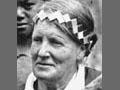 She became a teacher and was heavily involved in Sunday School and Bible Class movements. By the turn of the century she had moved to the North Island, and in 1913 she was appointed as the first matron of Presbyterian Manunui Boys’ Agricultural College which was close to Taumarunui.
She went on from there to train as a deaconess. During that time she made a start on learning Maori. At the beginning of 1917 she was appointed by the Presbyterian Church as a missionary to Tuhoe. She was to be based at Ruatahuna.
Tuhoe leaders had been petitioning the government to establish a school to serve the area for a number of years. Relationships with Tuhoe and government had been rocky. Things had come to a head just a year before Annie’s arrival in the district. Fearful of what was going on at Maungapohatu in the Ureweras and suspicious of the following that the Maori prophet Rua Kenana had drawn around himself, government troops had stormed the pa and arrested Rua and taken him off to prison. Rua’s son was among the fatalities of the day’s action.
When Annie turned up with a companion, Ms Monfries, at Rotorua, they were met by educationist and Presbyterian, William Bird, who remarked that they must have been from the farthest end of Southland, because no woman living any nearer than that would dream of entering the Ureweras at that time.
Presbyterian Maori mission minutes recorded:- ‘There were two places, Te Whaiti and Ruatahuna where the children run like hares from the sight of a Pakeha; where there are no schools and no other church has even attempted work; where the natives are so poor and so unlearned in the cultivation of their land that in winter they are on the verge of starvation. Mr Bird assured her that the government would put up a school whenever someone goes in and gathers the children together.’
Ruatahuna was very isolated. It took the women several days to make the journey in from Rotorua. They had a car for the first day. However the roads proved too taxing for it. The radiator kept overheating, the engine refused to turn over when cranked and they often had to push. In the end they gave up and walked to give the car a rest.
The next day they had a horse and buggy. But on the steep winding road the horse was unable to take them and their luggage, so again they had to walk a lot. The local constable was about to send out a search party when they finally arrived well after midnight.
The women had been offered a three bedroom whare in which to set up their new school. Two of its rooms had dirt floors and it had holes for windows. By this stage Ms Monfries was ready to go back home. Even Sister Annie’s optimism was severely challenged when the local rats visited them during the night. The two women lost no time finding alternative accommodation in the morning.
The arrival of two white women created a stir. Many in the community had never seen a white woman. One later recorded that he was quite young when he saw Sister riding along. He got such a shock that he jumped the farm fence and tore off into the bush. He thought that he had seen a ghost.
 A year later, Rev John Laughton arrived at Ruatahuna. Annie and John Laughton were to forge a firm friendship and a close working partnership. Laughton had been posted to Rua’s stronghold, Maungapohatu, to set up a school and do other mission work there. Rua had by this time returned from prison. While John Laughton was waiting for permission to proceed there, he and Rev Henry Fletcher with the help of local Maori built a schoolhouse out of palings for Sister Annie and her pupils.
John Laughton had no teaching experience. Sister Annie accompanied him to Maungapohatu and helped him to set up the school there. She continued to keep an eye on its progress and would cart in supplies for it when she visited. It was 30 kms from Ruatahuna to Maungapohatu. On one occasion she famously took over a big school blackboard by packhorse for Laughton’s school.
Sister Annie’s school roll grew rapidly as people found out about it. In its first year its roll went from 51 to 72. To keep on top of the class numbers the adult students were split off into a night school. Sister Annie won the hearts of those whom she worked among. She took a real interest in her pupils, and would arrange for the gifted ones to receive access to further education, sometimes paying their fees herself.
The closest hospital to Ruatahuna was two days away in Rotorua. Sister Annie was often called upon by the community to deliver babies and care for the sick. She nursed people through the terrible flu epidemic, and through outbreaks of whooping cough, and typhoid, and other illnesses. It was said that she was also quite skilled at pulling teeth.
From early on she held religious services. Te Kooti had brought the Ringatu faith to Tuhoe. Rua Kenana’s belief system was an offshoot of Ringatu. Both were a syncretism of traditional Maori belief and Christianity. Ringatu kept the sabbath and also a prayer day on the 12th day of the month. Sister Annie would attend these services, and after them she would invite everyone to attend Presbyterian services with her on the Sunday.
She built some close relationships with the spiritual leaders of the Urewera. They recognised her generosity and kindness, and her commitment to working for the good of their people. She in her turn had a genuine respect for who they were as people. She was to describe Rua Kenana as a ‘big hearted man, kindness in itself, a very intelligent man always ready to help.’ In 1927, after she had been working in the area for around a decade she attended a large gathering of Ringatu in Rotorua with a colleague. It was recognition of her mana that the two of them were invited to give an address during the main service of that gathering.
Sister Annie had a heart for young people. She had two favourite songs she would teach them. Jesus Loves Me and I’m H.A.P.P.Y.. Both are still sung at tribal gatherings around Ruatahuna. Often I’m H.A.P.P.Y. was followed by a Sister Annie variant, I’m L.O.V.E.D.
While she never married, she adopted a couple of Maori children. One had contracted polio and was paralysed below the waist when he came to live with her. She arranged for him to undergo surgery and rehab at Rotorua Hospital. This meant he could walk with the aid of crutches. The second, Rata, died in his teens of tuberculosis.
In 1929 acknowledging her standing among the people of the area, she was made a Justice of the Peace. She was one the first women in New Zealand to hold that position. She was a diehard rugby fan and was probably the first woman in the world to be the president of a rugby club – the Ruatahuna Rugby Football Club.
When she retired in 1948 she had been serving the people of the Urewera for 32 years. Once she moved to Ohope Beach she continued to keep an eye out for her people. She would regularly visit Tuhoe patients at Whakatane Hospital. In their turn the people of Ruatahuna kept her in firewood. In 1951 she received an MBE for services to the Tuhoe people. She died in 1971 aged 92. Her tangi at Ohope Marae was huge. Afterwards the funeral cortège visited numerous Marae on the way to her final resting place at Ruatahuna.
Annie Henry was a woman who lived a really significant life. She is a bit of a legend in the PCANZ. Yet, paradoxically, she did it by investing deeply in a community and a place that was in most people’s judgment very out of the way and insignificant. Like her master Jesus, she made friends among people whom others were frightened of, or didn’t understand, or couldn’t be bothered with. She was a woman of boundless energy and grit, and great kindness. She was a proficient organiser. She evidently had a good sense of fun. I also have it on good authority that she could be crabby when she was tired.
Post script
When I was researching this sermon I unearthed a couple of Tawa Union connections with Annie Henry. She died only 44 years ago. I found that there are two members of our congregation, at least, who have been in the same room as her. One is Ron Bichan. He confessed to being in the same room as her once. He said she was on one side of the room and, by this stage, quite famous and highly respected, and he was on the other side of the room and not at all famous. He did however know her colleague, John Laughton, quite well.
The other person from our congregation to have the distinction of being in the same room as Sister Annie is Mavis Duncan. Mavis in fact shared several rooms with Sister Annie over a couple of years. When Mavis was in her early teens she lived for a time with Sister Annie at Ruatahuna and helped her keep house. She remembers Annie’s son Rata, living in a tent because of his tuberculosis. From what I can figure out this would have been in the late 1920s. This house here would have been the one that she shared with Annie Henry.
 If you want to hear a bit more about Sister Annie and perhaps about how Mavis ended up delivering a baby, I suggest you ask her.
Biblography
*Hihita and Hoani – Missionaries in Tuhoeland, Wayne Te Kaawa, Whakatane District Museum and Gallery, 2008
*James Veitch. ‘Henry, Annie’, from the Dictionary of New Zealand Biography. Te Ara – the Encyclopedia of New Zealand, updated 30-Oct-2012
URL: http://www.TeAra.govt.nz/en/biographies/3h16/henry-annie
*‘Hihita – Sister Annie Henry (1879-1971)- Passion for Service’, Allan Davidson – sermon St Luke’s, Remuera 6 May 2012. www.stlukes.org.nz › Sermons › 2012
*Conversations with Rev. Ron Bichan and Mrs Mavis Duncan
I have talked about a couple of women who were significant influences in the Methodist Church and Disciples of Christ/Christian Churches – Susanna Wesley and Clara Celestia Hale Babcock.
 While I was trying to figure out which Church of Christ was the one in our Associated Churches of Christ family tree, I came across the website of the United Churches of Christ of the USA. It is not part of the Tawa Union Church family, but it is related to the Congregational Church, which is one of our NZ UCANZ partner churches. It was here that I began to unearth the story of Antoinette Brown Blackwell. It’s a fascinating story of a woman whose faith spurred her on to engage actively and publicly with many of the key social issues of her day. It’s a story that deserves to be told.
Antoinette Brown was born in Henrietta, New York, in 1825. Her parents had a farm. Antoinette was the seventh of their ten children. Antoinette’s grandmother would read her grandchildren Bible stories and Pilgrim’s Progress. Antoinette’s parents joined the throngs at Christian revival meetings. The family attended a Congregational Church. Antoinette had a keen sense of God from an early age. She was admitted as a full member of her church at the age of nine. One story goes that when she was eight she told her Sunday School teacher that she wanted to be a minister. Her Sunday School teacher promptly told her that girls couldn’t become ministers- full stop.
From the sounds of it she was never a girl who fitted the standard mould. She disliked needlework and other feminine pursuits, preferring to help out with the traditional boy’s tasks around the farm. Her parents recognised her individuality and her intelligence and were supportive of her. It is said, that her mum at one point pinned a white ribbon to the inside of her collar as something for her to hold on to when others criticised her or did not understand. Her father would pay her to do threshing so that she could earn money to further her studies.
When she finished school she taught for a while to save money for higher education. Many tertiary institutions in her day would not take women students. She found one that did – a Congregational college in Ohio, Oberlin College. When she completed her two year course in literature she applied to be admitted to the college’s theological course. While the college might have been happy to admit women into a number of its courses, theology was men only. And, obviously, that had to be so, because ministers were men only.
After some determined lobbying (Antoinette was articulate and persistent) the faculty grudgingly agreed to admit her to the course. However they made it clear to her she wouldn’t receive any recognition for her studies -no degree. She also had to get special permission from her teachers to be allowed to speak in class and from the Theological Literary Society to be able to present essays. Even so she managed to get some of her exegesis printed in the college quarterly magazine (with a disclaimer from one of her teachers).
Antoinette was a very gifted speaker, a clear thinker and a tenacious campaigner. They may have tried to hide it with snipes and condescension, but she would have been the terror of the theology department. She completed her theological studies in 1850. As promised she received no degree. It took a year of lobbying before the Congregational Church relented and gave her a licence to preach, but they refused to ordain her.
In her time at Oberlin College she had become more and more active in the anti-slavery, temperance and women’s rights movements. These interests saw her lecturing and preaching at a number of churches, halls and conventions. After lecturing in South Butler, New York, the First Congregational church there decided to call her as their minister. She was ordained there in September 1853. Two months later she became the first woman to officiate at a wedding in the USA. That same year she got thrown out of the World Temperance Convention in New York because she was a woman and had had the temerity to try to speak. On top of this that year she was also a signatory to what was to become one of the important early women’s rights documents in America – ‘The Just and Equal Rights of Women.’
She was in the South Butler parish for less than a year. There were financial issues with the church, she had some health issues and she was finding it increasingly difficult to fit within the constraints of the Congregational Church. 1855 saw her working as a voluntary community worker in the prisons and ghettos of New York City. A series of newspaper articles written out of this experience were gathered in a book- ‘Shadows of our Social System’.
In 1856 she married Samuel Blackwell. Samuel’s sister, Elizabeth was the first woman in the USA to graduate from Medical School. Samuel’s brother, Henry, was married to Lucy Stone, an old friend of Antoinette’s from Oberlin College. Lucy, like Antoinette, was a prominent feminist. It was an extraordinary extended family. The three women came to be known as the Blackwell women. Samuel and Antoinette had seven children, two died in infancy. For much of the next twenty years she concentrated on bringing up her family, writing and her work in the suffrage movement- the movement that laboured to get women the vote. She had a breadth of interests. She was in brief correspondence with Charles Darwin and wrote a response to his evolutionary theory. She was one of very few women at the time to be elected to the American Association for the Advancement of Science. She also wrote a book of poems, ‘Sea Drift’.
 By the end of the 1870s she was beginning to get back into public speaking. Around this time she and her husband reconnected with organised religion. She became a Unitarian minister, though it was not until 1903 that she served as a minister of a Unitarian Congregation. Mostly she concentrated on lecturing. Her main focus by this stage was women’s suffrage. She recognised that gaining the vote was only a part of what was needed to improve women’s status in society. She saw that having the vote would have little impact if it wasn’t accompanied by real opportunities for leadership for women. Only then would women be able to speak for themselves in the places that mattered.
Unlike a number of her peers she did not see Christianity as an impediment to women’s rights movement. It was its out dated interpretation based on poor exegesis and fossilised in church institutions that was the problem. Antoinette Blackwell was active in women’s suffrage associations right up into her eighties. She was a legend in her own lifetime. She lived until she was 95 years old and was one of only a few of the pioneers of the suffrage movement to still be alive by the 1920 presidential election, the first US election in which women were allowed to vote. She died in 1921.
Antoinette Brown Blackwell was a woman of considerable intelligence and talent. She was a woman who was ahead of her time and that got her into strife with those who wanted to preserve things as they were. She found too much to challenge within the organized church, and it is unsurprising that she spent so little time in pastoral ministry. She would have been uncomfortable company, in part because she drew attention to uncomfortable truths.
Her most fruitful ministry was out in society. Her faith in God led her to fight what she saw as unfair and unjust. She had a heart for those who were at the bottom of the heap and she used her gifts to advocate for them. She was a perceptive critic of her society. She could see that the injustice that she and others ran up against was imbedded in the structures and attitudes of her society. Effective change wasn’t simply going to be a matter of confronting tyrants. The tyrants were merely a symptom of the system. The system was what needed to be challenged and transformed. And that was the work that she went at with courage, tenacity and intelligence. That was how she fulfilled God’s call on her life.
Bibliograpy
*Wikipedia, http://en.wikipedia.org/wiki/Antoinette_Brown_Blackwell
*http://winningthevote.org/F-ABBlackwell.html
*Dictionary of Unitarian and Universalist Biography http://uudb.org/articles/antoinettebrownblackwell.html
The introduction contrasts traditional theology of substitutionary atonement preached by some churches with the fellowship, humanitarian, social work and profile raising of equality, justice and peace by other churches. Churcher describes himself as a Christian Humanist – does this imply the spiritual dimension is missing? Is it an oxymoron? Churcher defines it as placing less (no?) emphasis on Jesus’ divinity and more on his compassionate forgiveness and concern/interest for people – especially those at the edge of society. This is a role much needed even in our much advanced civilisation and higher living standards – compared with the first century. What we do is more important than what we believe. This prompted a discussion on the role of the church – to save souls or be the social conscience of society or a social club similar to Rotary?
We wondered what was the source of the divinity of Jesus – what he claimed about himself or how the early writers portrayed him which were taken up by the church? Was his divinity a reflection of his sense of spirituality – note how he made time to take himself out of everyday situations to mediate – interpreted in the Bible as prayer?
Greg had a conservative Christian upbringing – buying a Scofield Bible instead of a train set. It was a number of years before he came to realise that the Scofield was not the Bible, but instead gave a particular theological perspective of the Bible, eg that Moses didn’t write the first 5 books. Now an understanding of history and archaeology provides an opportunity to explore the alternative views and interpretations within it’s framework – it’s very human-ness and historical significance has made questioning an imperative. The Bible is not a set of answers, but people’s experiences often in situations of stress or conflict. Hence need to let each of the Gospels stand on their own and not try to reconcile the different views and experiences of the writers.
Greg conjecture’s that no-one thinks everything in the Bible should be taken literally; his starting point is that nothing in it should be taken literally. It’s analogous to a musical score – it’s not the score that is important; it’s the interpretation by the conductor & musicians and then the interpretation of the resulting sound by each listener that is important. One’s interpretation of the Bible says more about you, than about the Bible text! We need to engage with it. It is not a ‘constitution’ used to prove one’s point of view. [Somewhat off topic, Greg notes that a lot of church activity is organisational – not discussion of theology, spirituality or the Bible – how true!]
Technology has and will continue to have a significant impact on the Bible – at the moment not clear where this will end. Paper material is read differently than electronic media. Hyperlinks can be a distraction or assist understanding. Less need to memorise verses – can easily search for them. Books are likely to become less important in Western society where the Bible has been ‘the predominant book’ that everyone for many centuries knew stories from or had read pieces of. There is a lot of ‘Christian’ material on the web at present – of very variable quality. Over time Greg thought this will settle in a similar manner to the 200+years it took to agree on the Cannon for the Bible.